


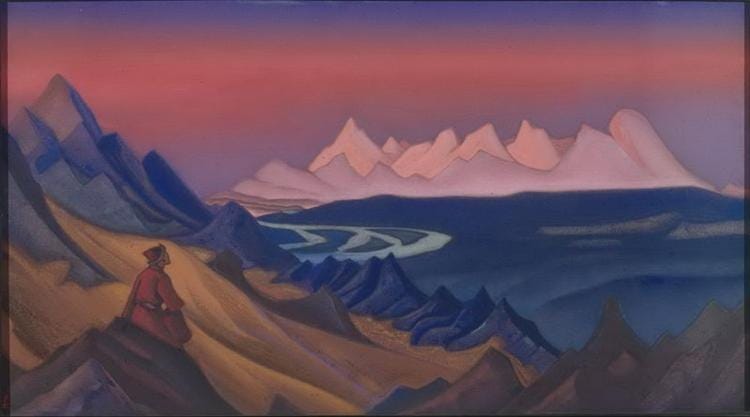
“Someone who is permanently surprised that depravity exists, who continues to feel disillusioned (even incredulous) when confronted with evidence of what humans are capable of inflicting in the way of gruesome, hands-on cruelties upon other humans, has not reached moral or psychological adulthood.”
― Susan Sontag, Regarding the Pain of Others
When I started my substack, I wanted to create an online archive where I wanted to document my observations about structural injustices prevalent in modern system and how some of them need desperate mending. It was early 2020 and the systemic failures were apparent in the way the pandemic was handled, the vaccine apartheid in the global south, the hollowness of medical systems was apparent, while all the main pillars of civility and security faltered. The lopsided world started to reveal itself to me, sometime in words, sometimes in symbols, sometimes in dreams. But mostly in media, news, stories told within close circles, shared burden of living in a world where suffering is osmosizing through all surfaces of the mundane.
I sensed then what I can now claim with certainty — the roots of the problem are not where its branch appears. The stasis of inequity, war, oppression, and our modernity hiding the thick undergrowth of emerging neo-colonial malevolance were alluding to an axis where I sensed the world would soon be shifting. And no less than a couple of years into joining substack and constructing essays on the dark-forgotten stories of past that reveal the shadows of our current world; Russia invaded Ukraine overnight, and human civilization plunged into the modern era of open violence, territorialism, war, and destruction unleashed on its inhabitants.
We gaped in horror as we witnessed the cruelty that we are still so capable of. Any erroneous assumption that we have learned anything, if at all, from our past wars frizzled away only leaving the hollow shell of complacence and weak spined world leaders who would ride any wave of separatist agendas that enable them to remain in power. They would continue to water the fragmented egos of the confused and lost masses. What can afterall explain the rise of a global extremism better than the politics of division — the age old religious mistrust that has anyway been sworn between two sects of people — who in their deepest heart know that their differences are used as political weaponary to benefit only those at the helm of power.
I failed after trying for a few years now, to write about violence without confronting the politics that causes it. I wondered, how can one ever write about a philosophy of destruction unless they name the vessel that carries it? The war mongering leaders have polarized the world. They are unabashedly determined to tether their madness to everything that exists within the field of their influence, which is practically everything.
When Pope Leo quoted Bob Dylan in one of his essays a couple of months ago, I finally found the light I was looking for at the end of my tunnel of incomprehension as a writer at all of this suffering unleashed on innocent people. I was reunited with the eternal realm of light workers who guide civilization to restore peace, the same place from where truth and beauty spearhead through bullshit fed to us by political systems. The same week I stumbled upon the work of Nicholas Roerich, a legendary Russian polymath who chose to spend his life in the Himalayas, immersed into the myths and legends of Shambala. Roerich was an exceptional painter. He created 7000 breathtaking ethereal landscape paintings of India, especially the Himalayan mountains. His pacifist work got him the reputation of the peace advocate that we know him as today. Roerich was the core proposer of the groundbreaking Roerich pact — a 1935 treaty that declared cultural and artistic heritage as sacred ground, untouchable even by war, built on Roerich’s conviction that peace could be seeded through the protection of beauty. The core tenet, signed and approved by all 21 members of the Pan-American Union, and agreed to by many more, was supposed to protect all cultural and historical heritage during wartime, no matter the cost. I learned that the pact has been violated endlessly during almost all international confrontations. Apparently signed treaties and empty recognition of peace mean nothing when men are handed down weapons and commanded to destroy — both life and its essence preserved in art.
If my implicit commentary has not made it apparent in my six years of naming systemic injustices, let that voice become explicit today — the wars waged in this decade are all neocolonialist and extractive in their agendas, disguised in rhetoric of sovereignty and freedom. The glory that these megalomaniacs claim, comes at the cost of indefinite, endless human suffering and ecological destruction. It is the most heinous, elaborate, and insidious mechanism that has the blueprints of the early colonial pillars of—genocidal, terraforming, imperialistic ideologies—hidden in plain sight.
I can think more clearly since I have quit reading hot takes, relentlessly economized on convincing me of their methodically created spectacle out of other people’s suffering. I refused them all and settled into my zone of quiet to form my own understanding. When I feel so reclusive of the world at large, I generally wander inside the timeless classics — works done at the epicentre of a world that always seemed to be falling apart. These giants of literature who understood human nature like no one else are my eternal guides — Dostoevsky, Dumas, Thoreau, Tagore, Kafka, Woolf, Márquez, Murakami, Hosseini, and Camus. They teach me that everything political is impenetrable without a philosophical foundation.
Philosophies were considered sacrosanct in comparative determination of one’s worth to another. It was the invention of principles based philosophy that gave us our place in this world. This invented psychological dimension of existence resulted in our sheer disconnection from the animal body and its instinctual reasons. And hence it leads to this endless fragmentation of ego which makes suffering inherent to human nature. This form of hyper fragmentation of self among the few hundreds or less of egotistical oligarchs, billionaires, bureaucrats, and politicians, who carry the mast of the world leadership, are solely responsible for these waves of polarized, and radicalized world.
Before War there was Human
We humans are such paradoxical creatures. Holocene, the first stabilised epoch for us was the beginning of domestication of crops and livestock. We built tribes based on shared ethos and cosmic order, which later gave shape to religions. But on the other hand we formed anxieties based on our geographical separation, we built enclosures around Earth’s abundance and called it personal wealth. However, it owned us more than we owned it. Because immediately after that we demarcated our lands to keep out our neighbours. Hostility and envy poisoned our hearts.
We elected leaders and handed them our lives like they were incorruptible by power. We built the concepts of militancy and ownership to protect the wealth, ‘our wealth’ we called it. We created a body of philosophies not to walk the way of liberation but to spar with one another to the ends of our intellect. And we have senselessly, tirelessly done this for 11,000 years give or take a few millennia.
Many mystics arrived and tried, in vain, to show us the path of love, peace, brotherhood, and belonging. Some of them we murdered and some we exiled, others we caged in the esoteric guilds, and ostracized them. Only a shadow of them now haunts our world and their sacramental knowledge is now twisted to serve our ends. Under the translucent veil of self-serving religious ideologies, we continue to blame, exploit, misunderstand, and kill.
Othering of Pain
I constantly rebel against the depravity of living in injustice and inequality. I don’t want to get accustomed to the cruelty deferred to undertakers of crime, unravelling in varied proportions, constantly in my awareness of the world around me. Still I can’t help but notice people feeling comfortable with violence and scapegoating all the time. Amongst the masses, there is no visceral reaction, vehement opposition against all sorts of treachery unfolding within our social and political spheres. It is safe to say that there is hardly any reaction at all. The life of citizens is so widely removed from the performative aspect of politics that many of us will comfortably and quietly bury our heads into mundane and forget about the greater suffering and injustice, if that’s what suits us the best.
I tend to question the purpose and role of media, in all its form, in exposing the news and images of suffering to such numbed masses, who are incapable of feeling depravity, for no cruel predisposition of their own but because of the general business of living and surviving with their own sets of hardships. The immediate sphere of large scale wars, is often devoid of those who are on the receiving end of the news of such wars. Devoid of being put under the pressure of surviving the rounds of bullets fired at them for fetching food and aid for their family, raining bombs, strategic genocide, torture, and starvation. It is not hard to imagine why people feel so little at the spectacle of it all. It seems distant, almost fictional, when you see it on repeat — as if being transfixed by a horror movie reel.
Susan Sontag has been a very active voice on this aspect of war reportage. She writes, “People don’t become inured to what they are shown - if that’s the right way to describe what happens - because of the quantity of images dumped on them. It is passivity that dulls feeling.” The othering of the pain of someone who is not us or our family is the root at which all the major discrimination is festering and growing. It is not in the lack of empathy, but in the lack of active imagination and widescale desensitizing of the suffering of others that lead us down this route of normalizing the state of human condition that is neither morally natural nor socially sustainable.
I constantly keep thinking of a way of life, a spiritual path perhaps, I often desperately grapple towards it even, in times of crisis — a means of being where such exteriors of human difference perish and we are awakened to the nature of our oneness. I know such a state exists, because I have experienced it several times when I am immersed in a state of pure awareness and deep meditation.
How many more mountains of self-delusion and separateness will humanity climb before realizing that we are an ecology of consciousness? You and I. We are not separate from one another. We work in networks, like mushrooms, enriching each other, growing together. Whether we want to accept it or not, there are tremendous developments in science that prove the nature of consciousness to be interconnected. The western philosophy of emotional and intellectual solitude is devastatingly incorrect. It has fragmented our world. It has led us to othering the pain of those we think are different, but are our own.
The Lost Way of Heart
There is a hope-shaped hole in our awareness that cramps with pain in wake of large-scale suffering — of beings unscathed by the shadow of the evil doings of mind, of eternal witness free from the curse of thoughts, of innocence so pure and intact to protect which the world should fall into place. I am not dismayed easily by the intensity of life, but my god-my god the suffering unleashed on these beings has to be answered by the perpetrators.
I don’t know how the sound of those answers will arrive and how will we negotiate with it all — the grief we have accumulated at the gates of our unresisted bifurcation from necessary peace. I am not certain what justice might look like for them who are wearing scars so deep, oceans could be contained within them. But I know God, if there is such a presence, will have to answer to the inquisitors at his doors. I know that answers, when they arrive, will quake those who have amassed power to hold violence in their grip.
A couple of months ago, I had many different dreams of my father, in context that is limited to dream logic. I remember that the period entailed listening and reading about the Kingdom of Shambhala quite a bit. For those of you who aren’t aware, Shambhala is a city of equanimity and peace written about in vivid detail in the ancient Kalachakra tantra scripture in Tibetan Buddhism. Kalachakra translates to Wheel of Time, and the citizens of Shambhala are believed to be the keepers of that knowledge. It is mostly believed to be a mythical place but in some interpretations, Shambhala is also a place somewhere in the inner Himalayas.
One of those dreams of mine, looked as if a waking rendition of a Roerich painting. I saw myself sitting in front of a long cushioned bench where my father sat with his back to a two-paned French window. The backdrop to him was rising mighty and far, snow-capped mountains on which early morning sunrise reflected in hues that looked like a color birthed in the marriage of clementine and rose. I was more an observer and the scene unfolded without much of my participation anyway. It was a beautiful morning, and there was a tremor of unspoken words on my father’s lips, though he remained quiet. I looked at him in fondness and then glanced over the hill and spotted a car travelling the spiral roads in our direction. I gestured at it and his gaze followed my lead, he turned around and seemed to be absorbed in the warm but engulfing stream of that otherworldly light reflecting off of the snow peaks, which reminded me of the Himalayas.
I woke up from that dream, held in a certain sense of peace that I have not known in a while. Shambhala, in my experience, is an inner kingdom. A realm beyond the greed and envy of human mind. Where beings are one with the light which creates them, where wounds are embraced and healed, where suffering is understood without the need to speak it. Shambhala is a dimension inside one’s heart, the road to which can only be travelled with love and compassion, the door to which can only be opened with wisdom. It is visible to those whose heart’s eye can see beyond the material reality. It is a place available to those who can occupy the shape of hope in the craters of the wounded hearts. Those who can live without claiming ownership, love without reservations, give without discrimination.
In this broken world, we walk the path of Shambhala — when we choose others before us, when we stand our backs to the avalanche of suffering in order to protect the innocent, when we speak to silence the sorrows that drown every good in the world. We carry the seal of peace, banner of hope, virtue of love, and motive of restoration to which mountains and oceans split open their paths to lead us into harmony, to lead us down the road of dharma, the road of duty.
Wars and conflict are parts of human condition, yes. But those are not the only conditions we humans know by default. We also know joy and love, and we are completely capable of harnessing them under all circumstances. Perhaps we will someday live in a world where peace is a necessity we can no longer afford to lose. But until then, I will carry within me the Maps of Shambhala, lest I am led astray by the treachery of the modern world.
Berkana is a non-stripe based reader-supported publication. Stripe does not enable independent creators from India. To encourage voices like mine that work from the margins, consider becoming my patron through Paypal.
Beautiful essay. Reading the last section calmed me into that very feeling of peace. May all beings know happiness and the root of happiness. 🙌
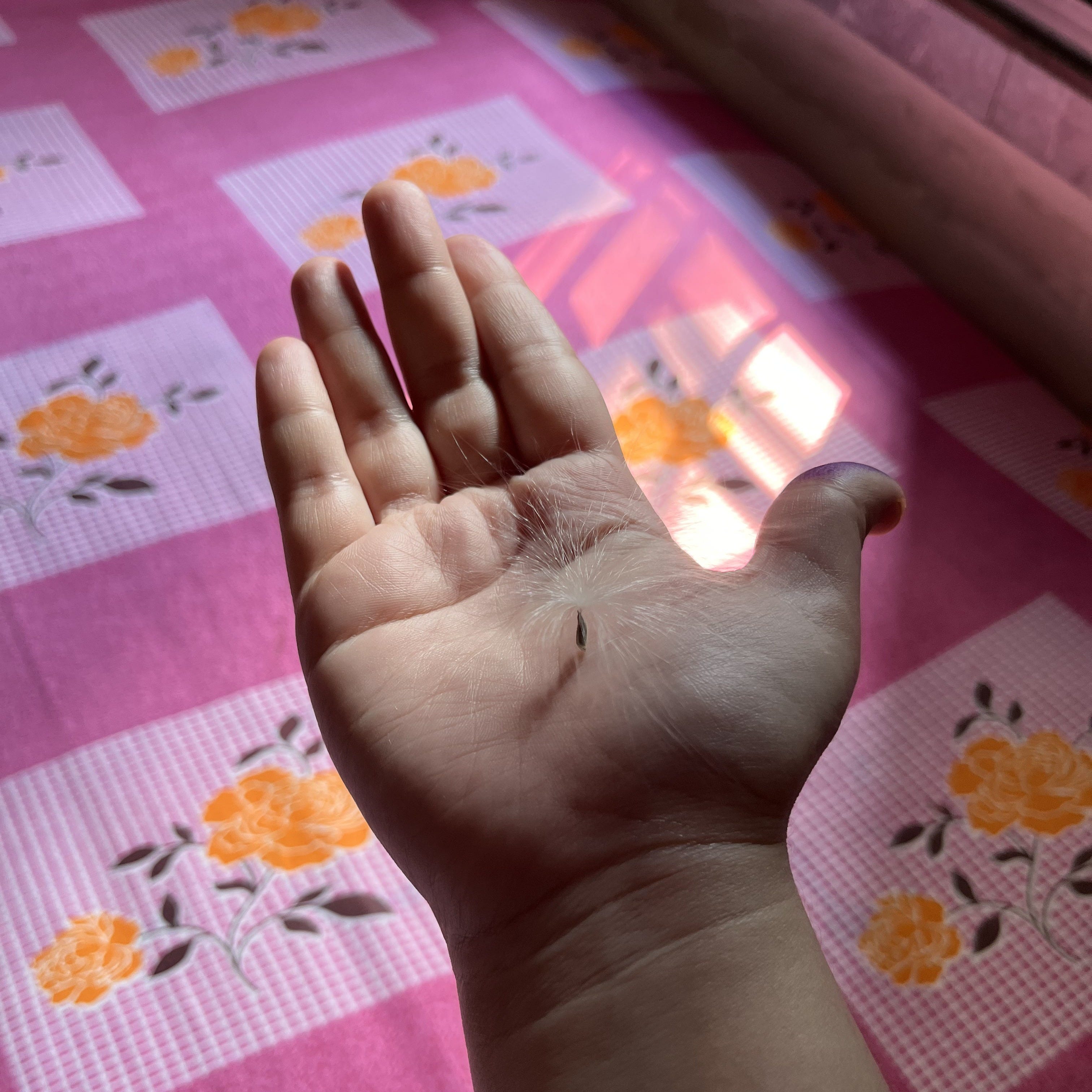
I was in tears less than halfway through reading this, and fully when I saw that beautiful photo of (your?) hand with dandelion seed (at least that's what it looks like to me!). And then I remembered a short animated video essay I saw a few months back about a Russian botanist who was arrested and sent to the Gulag, where he wrote his daughter in Leningrad regularly, pretending he was on a scientific research trip. He sent her some dandelion seeds and talked metaphorically about the strength and determination we don't always know we seed.
"how can one ever write about a philosophy of destruction unless they name the vessel that carries it?" What a question! Maybe it's THE question. I've been thinking again of Abdullah Öcalan's work, and this line reminded me of his contentions about power and wealth hoarding always traveling hand in hand going back around 5,000 years.
You are a light, my friend, and one of the most powerful ones I know. Your voice in this essay, in all your essays, shakes the ground under my feet halfway across the world.❤️🔥🕯️🧚